Designing Usable AI Creation Systems
Improving prompt usability, AI transparency, and human-AI collaboration in an AI creation platform.
AIONE is a centralized AI creation platform that consolidates fragmented generative engines into a single, zero-friction workspace, empowering everyone from curious beginners to precision-driven expert creators.
Role
Product Design
Scope
AI interaction design
Deliverables
Product strategy & opportunity mapping, AI-enhanced creation flows, Unified design system, Interaction & motion guidelines, Community ecosystem design, Mobile & Web experience design

01 AI Was Powerful — But Felt Random Users experienced inconsistent outputs, leading to confusion and low trust.
Interactive Index — Click to navigate
08 What This Taught Me About Designing AI Shifting from interface design to system and behavior design.
02 The Real Problem: Users Can’t Say What They Want A gap between human intent and AI-understandable input.
03 Designing for Intent, Not Input A structured system to help users progressively express intent.
04 From Black Box to Glass Box Making AI generation transparent and explainable.
05 Turning Prompting into Collaboration Designing iterative human-AI co-creation loops.
06 Building a System, Not a Feature Creating a scalable framework for consistency across experiences.
07 When Users Start Trusting the Machine Increased confidence, fewer retries, and stronger retention.
01. AI Was Powerful — But Felt Random
1.1 The Engine: AI Capabilities & Technical Constraints
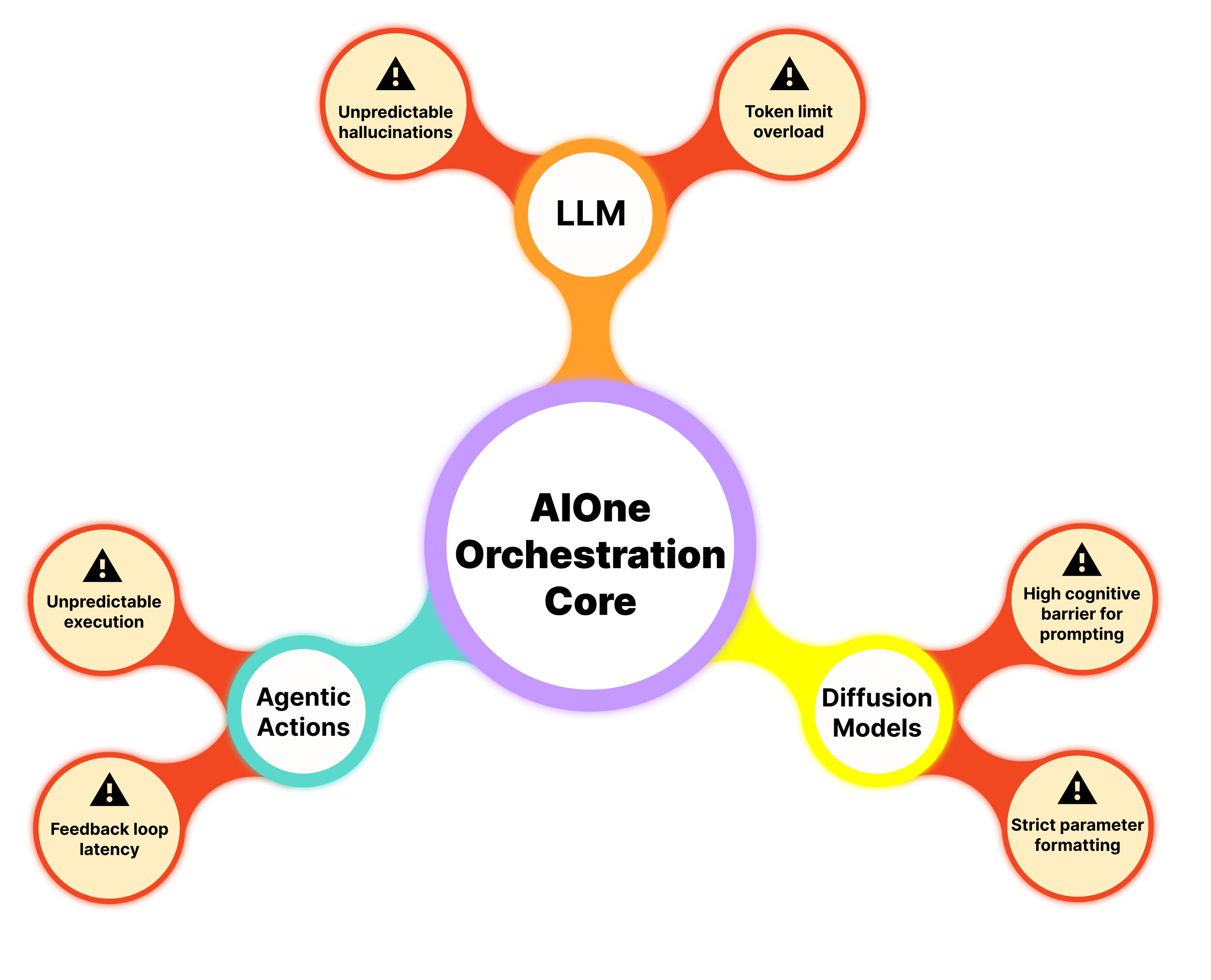
To architect a seamless experience, I first mapped the core engine's capabilities—LLM, Diffusion, and Agentic Actions—against their respective technical boundaries. By identifying constraints like hallucinations and execution uncertainty early on, I was able to design proactive guidance systems rather than reactive error states.
1.2 My Scope: Architecting the Experience
What I Owned (Led & Architected)
System Architecture & Interaction: Architected the end-to-end product logic and interaction model from 0 to 1.
The Guidance Model: Defined and designed the "Multi-layered Guidance Pyramid" to reduce user cognitive friction.
What We Collaborated On (Cross-functional)
AI Output Normalization: Partnered closely with AI/ML Engineers to normalize fragmented model outputs (e.g., structuring unstructured JSON/Base64 data) into a cohesive UI experience.
Feasibility & Trade-offs: Aligned with Product Managers to balance AI technical constraints with business goals.
What the Team Executed
Underlying AI Models: The ML engineering team built the core algorithms and backend routing logic.
Front-end Implementation: Collaborated with the development team for final production.
02. The Real Problem: Users Can’t Say What They Want
2.1 The Ambiguity: Navigating the "Blank Canvas"
The Pain Point:
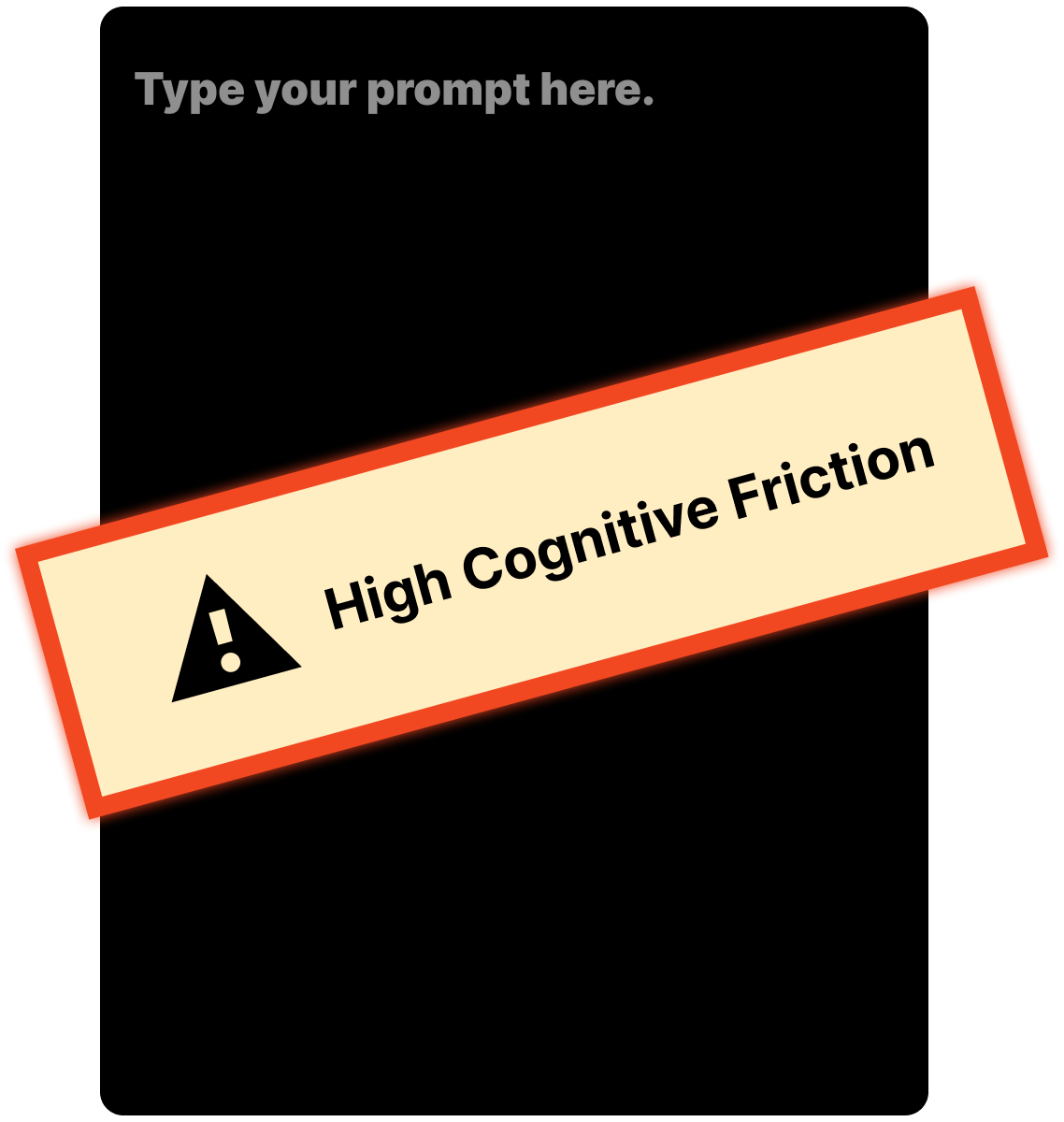
While infinitely flexible, an empty input field provides zero affordances, leaving non-expert users overwhelmed.
Shifting the Paradigm: Architecting for Trust & Guidance:
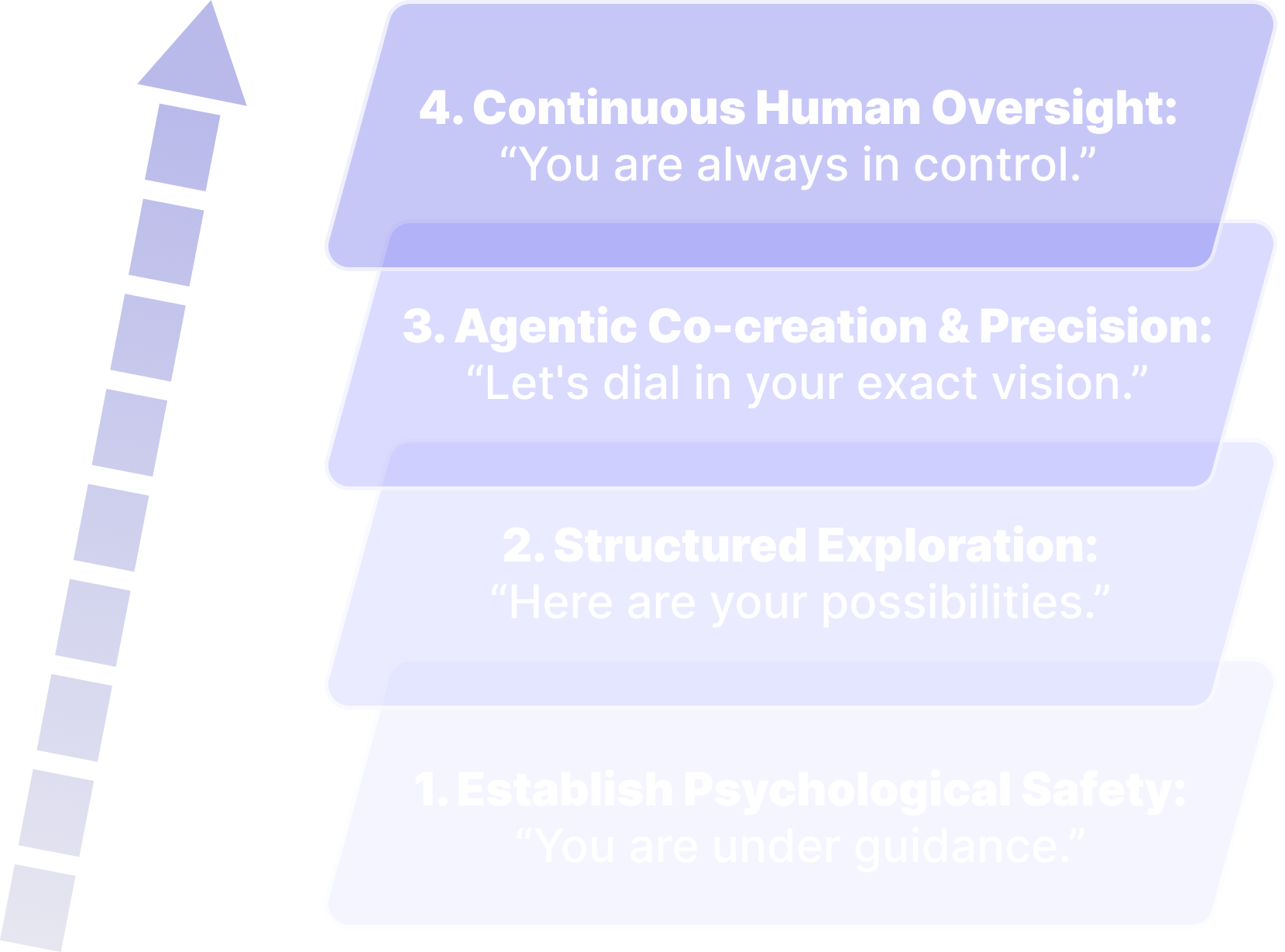
Safety ➔ Exploration ➔ Co-creation ➔ Oversight
2.2 Investigation & Trade-offs: What We Didn't Do:
Iteration 1:
Free-form Text Input
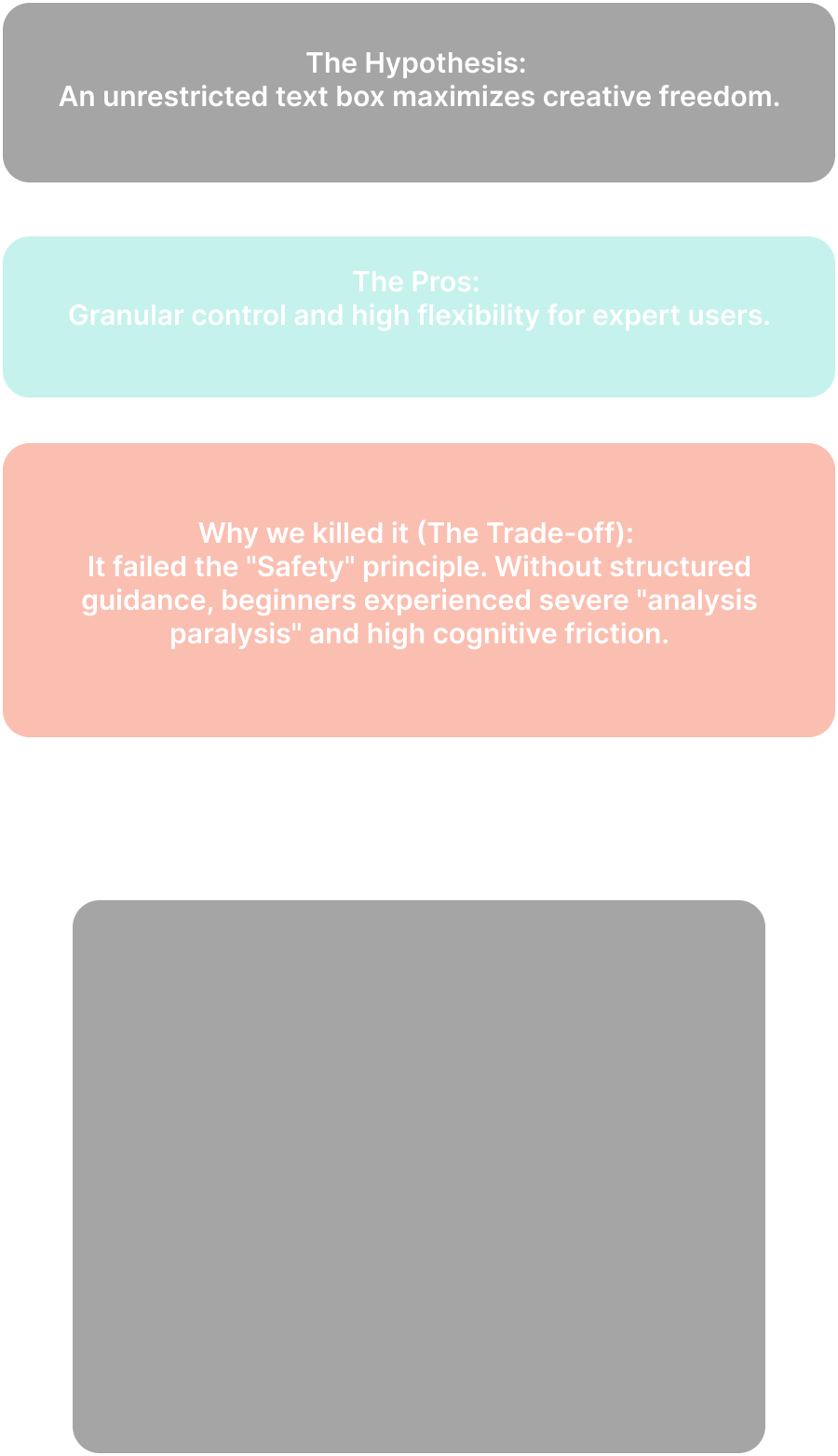
Open prompt pattern
Iteration 2:
The Massive Tag Library

Tag library pattern
Iteration 3:
The Rigid Tag Skeleton
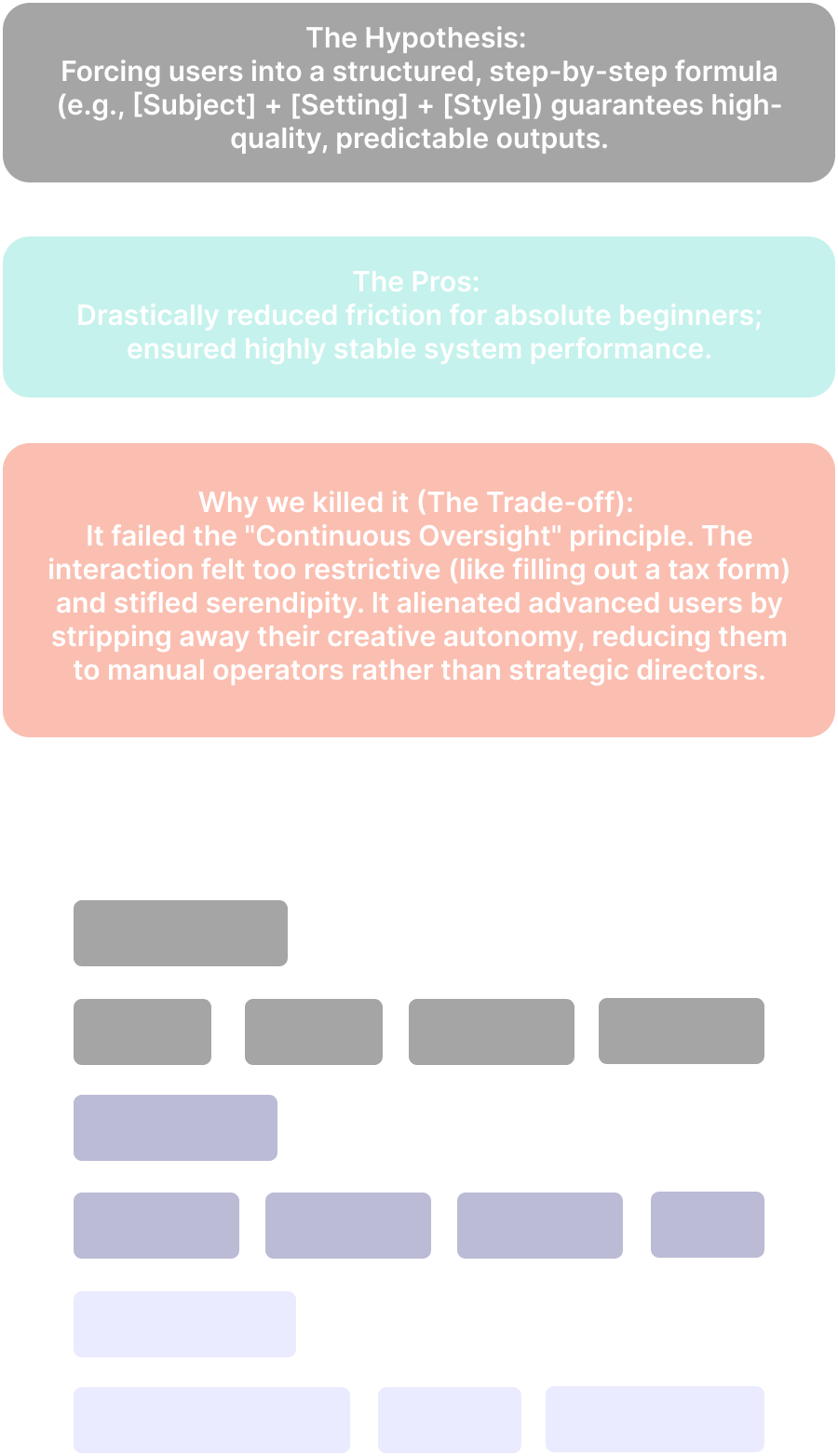
Structured Tag skeleton pattern
2.3 The Core Challenge: Defining the Guidance Model
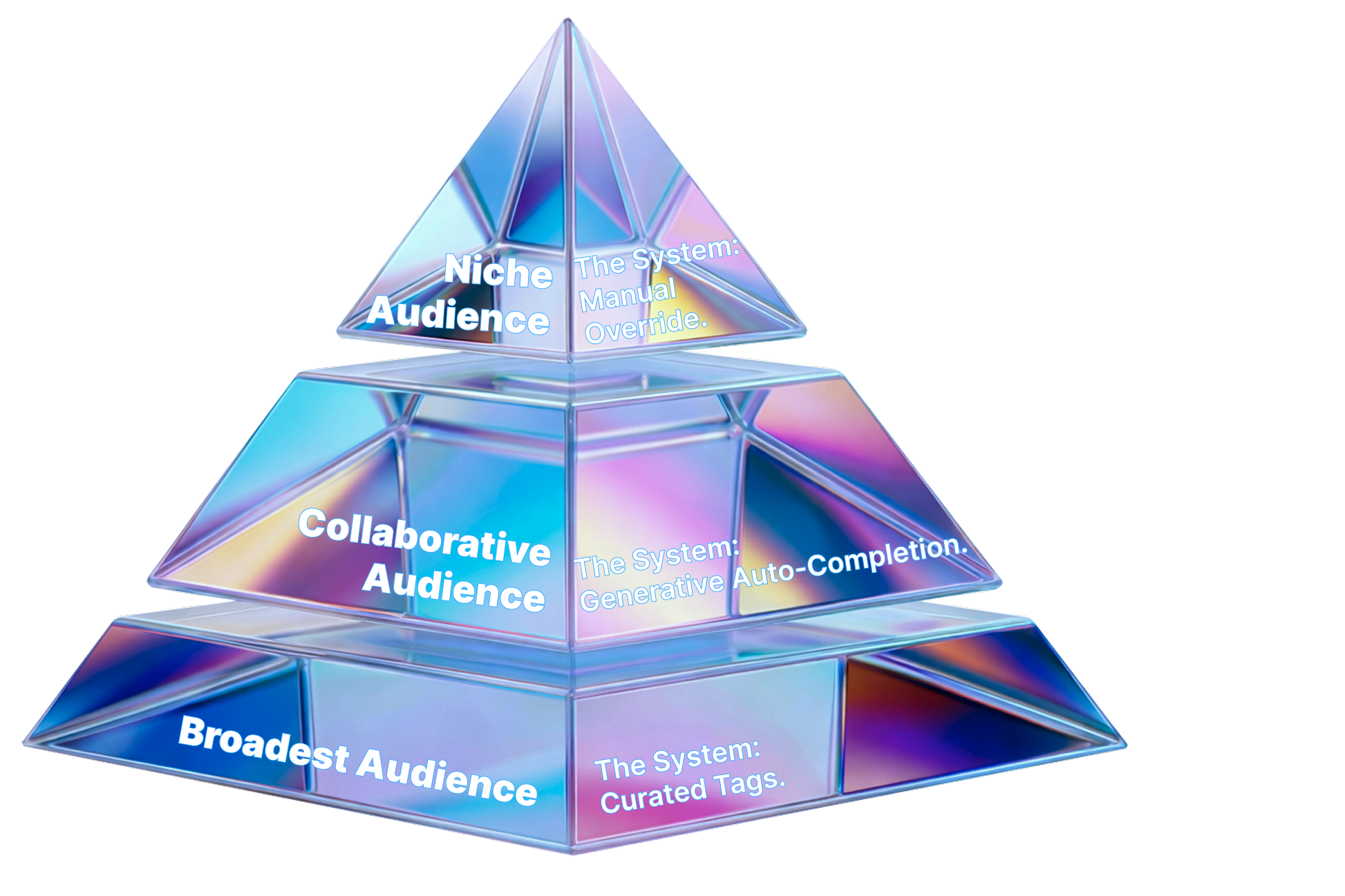
The Progressive Guidance Pyramid
The 4th Solution: The Guidance Pyramid To balance the paradox between beginner safety and expert control, we moved away from single-component solutions. We architected a system that progressively delegates control based on user expertise.
03. System Architecture & Intelligence
3.1 The Orchestration Layer: Agentic Delegation & Trade-offs
To eliminate the fragmented experience of using multiple engines, I designed the Orchestration Layer not as a "black box," but as an Agentic Delegation System. By intelligently analyzing user intent, it dynamically routes tasks across different APIs—balancing compute costs, latency, and output quality. It then normalizes the fragmented outputs into one frictionless, coherent workspace.
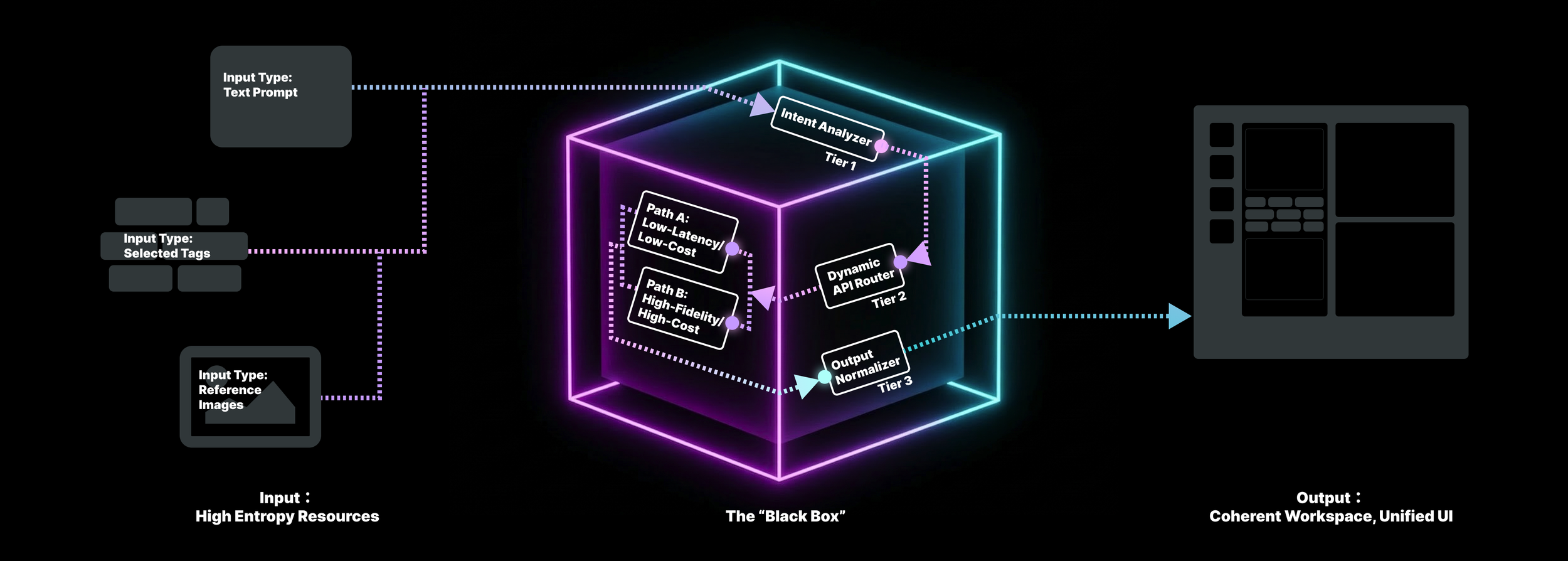
To mitigate the "black box" nature of generative AI, I architected a three-stage transparency framework. This system proactively communicates the engine’s internal logic, transforming waiting time into a trust-building experience.
The Three-Stage Transparency Framework:
Step 01. Semantic Validation (Validating Intent)
Action: Acknowledging the system’s interpretation of high-entropy inputs.
Goal: Bridging the semantic gap to ensure the AI and user are aligned before high-compute execution begins.
Step 02. Logic Disclosure (Agentic Transparency)
Action: Revealing the internal routing logic—such as choosing between Diffusion or LLM paths.
Goal: Managing user expectations regarding latency and output quality by making the "Agentic Delegation" visible.
Step 03. Cognitive Buffering (Building Calibrated Trust)
Action: Visualizing calibration parameters and real-time progress indicators.
Goal: Reducing user anxiety during intense computation cycles and establishing a calibrated level of trust in the final output.
3.2 Explainable Generation: The "Glass Box" Approach
04. Design Interventions & Iteration
4.1 The Tiered Guidance System: From Fragmented to Cohesive
One Step Entry: We consolidated scattered AI tools into one coherent workspace—eliminating the need for repeated logins, manual file transfers, and fragmented outputs.
Clear entry points and streamlined task flows helped users get started faster and stay in flow, reducing cognitive friction and boosting early retention.
System Architecture - The Intelligence Layer: From Vague Intent to Unified Output
We used a focused palette, dynamic gradients, and subtle motion cues to express AIONE’s intelligence and fluidity. Every interaction reinforces clarity, guiding users through complex AI capabilities with ease.
The result is an interface that feels cohesive, responsive, and intentionally crafted—reflecting AIONE’s goal of making advanced creation feel simple.
As our web experience gained traction, we expanded AIONE into a fully supported mobile app. To ensure a seamless and non-overwhelming creation flow, we enhanced the AI-assisted prompt system with a multi-layered guidance model. Users can start with curated tags, let the AI generate complete prompts, or fine-tune the results manually. This tiered approach makes the process approachable for beginners while maintaining high structural quality for advanced users—delivering a polished, intuitive experience across platforms.
Design Decisions - The Guidance Model: Solving the "Blank Canvas" Paralysis
Core Experience - One Shared Dream
We designed AIONE’s community to turn individual creativity into a shared, evolving ecosystem.
A zero-friction start invites newcomers in with free trials and prompt-code starter kits so they can learn and create immediately. Personal spaces give every member a place to express themselves through customizable profiles, posts, and lightweight interactions. A creator-first publishing flow—clean covers, auto-credits, easy sharing—makes it effortless to publish work, and equally easy for others to save, remix, and follow.
Together, these loops transform curiosity into participation and participation into belonging—supporting both users and creators while strengthening AIONE’s long-term engagement and collective momentum.
AIONE brings creators together in a vibrant, built-in community where users can share work, express individuality, and collaborate effortlessly. This social layer strengthens engagement, builds loyalty, and gives AIONE a defensible edge in an increasingly competitive AI market.
AIONE didn’t begin with features—it began with questions.
Before defining the product, we conducted a comprehensive research phase: analyzing competitors to understand the minimum bar for competitiveness, and running in-depth user studies to uncover where current AI tools overwhelm, confuse, or break creative flow. Through this process, we identified the pain points that mattered most and stripped away anything that added friction without adding value.
This thoughtful foundation became the starting point for AIONE: a platform intentionally shaped by user needs, market realities, and a clear vision of what an AI creation experience should feel like.
Conclusion
AIONE shows that even in a fast-moving AI landscape, simplicity and direction are competitive advantages. Through a unified workflow, guided creation, and a connected community, we transformed overwhelming capabilities into a coherent, empowering experience. The result is a platform built to evolve—and to keep users creating.
Immediate disruption
Impact
As a new entrant in the AI creation space, AIONE showed strong signs of immediate impact even before launch. Early intent signals, waitlist trials, and behavior models all pointed to a product capable of shifting user expectations and reshaping creative workflows. Here are the projected effects based on pre-launch data.
5X
Up to 5x more user-generated outputs per active user(based on waitlist trial behavior)
20%
Forecasted lift in activation rates
(inferred from fake-door CTR and onboarding trials)
10K
10K prompt explorations generated in waitlist trials
Pre-launch metrics from waitlist trials and onboarding experiments; definitions and cohort sizes available upon request.