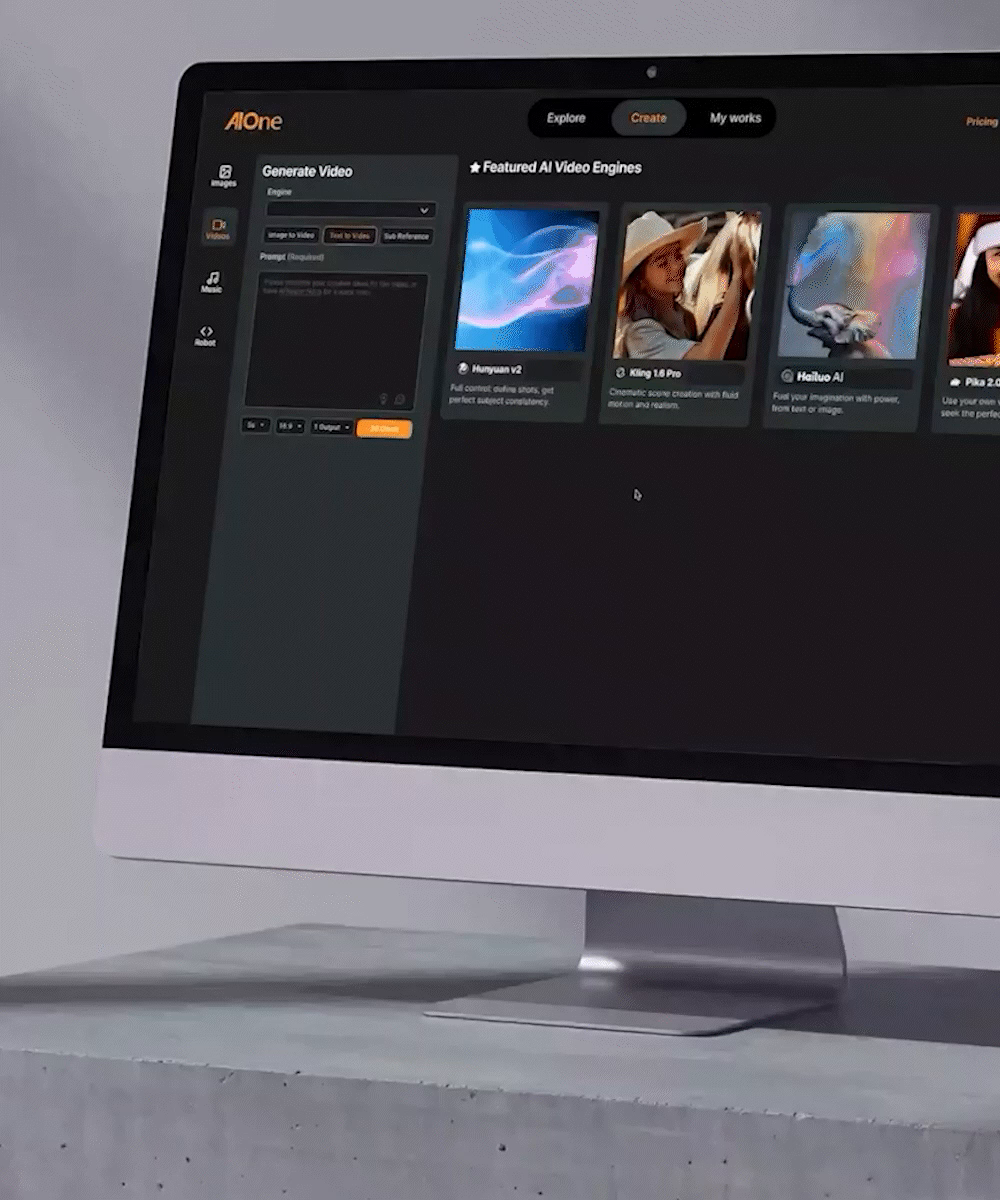
AIONE - AI Intent Collaboration Agent
AIONE is an AI Intent Collaboration Agent designed to turn ambiguous user intent into structured, controllable AI instructions through transparent human-AI collaboration.

1. The Problem: Why Prompting Breaks Down
Generative models are no longer the bottleneck. Human expression is. Users often know exactly what they want, but struggle to translate that intent into explicit instructions AI can understand. AIONE exists to bridge this gap—transforming human intent into structured, interpretable instructions while keeping people in control of the process.
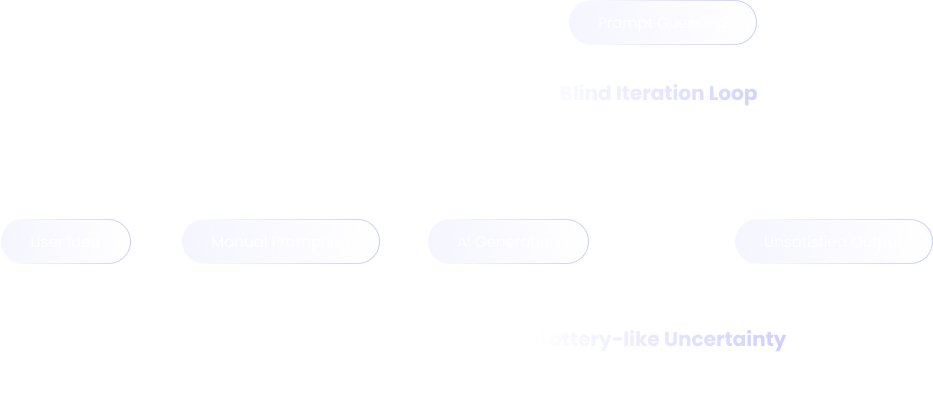

Existing Creative Workflow: While AI has become part of the creative process, users still face significant uncertainty because prompt quality heavily influences the final result.

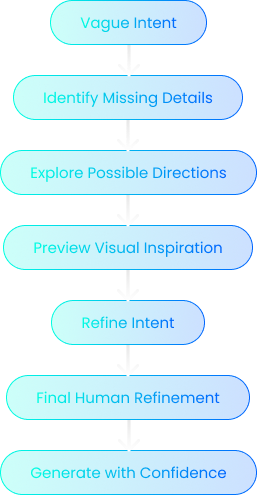
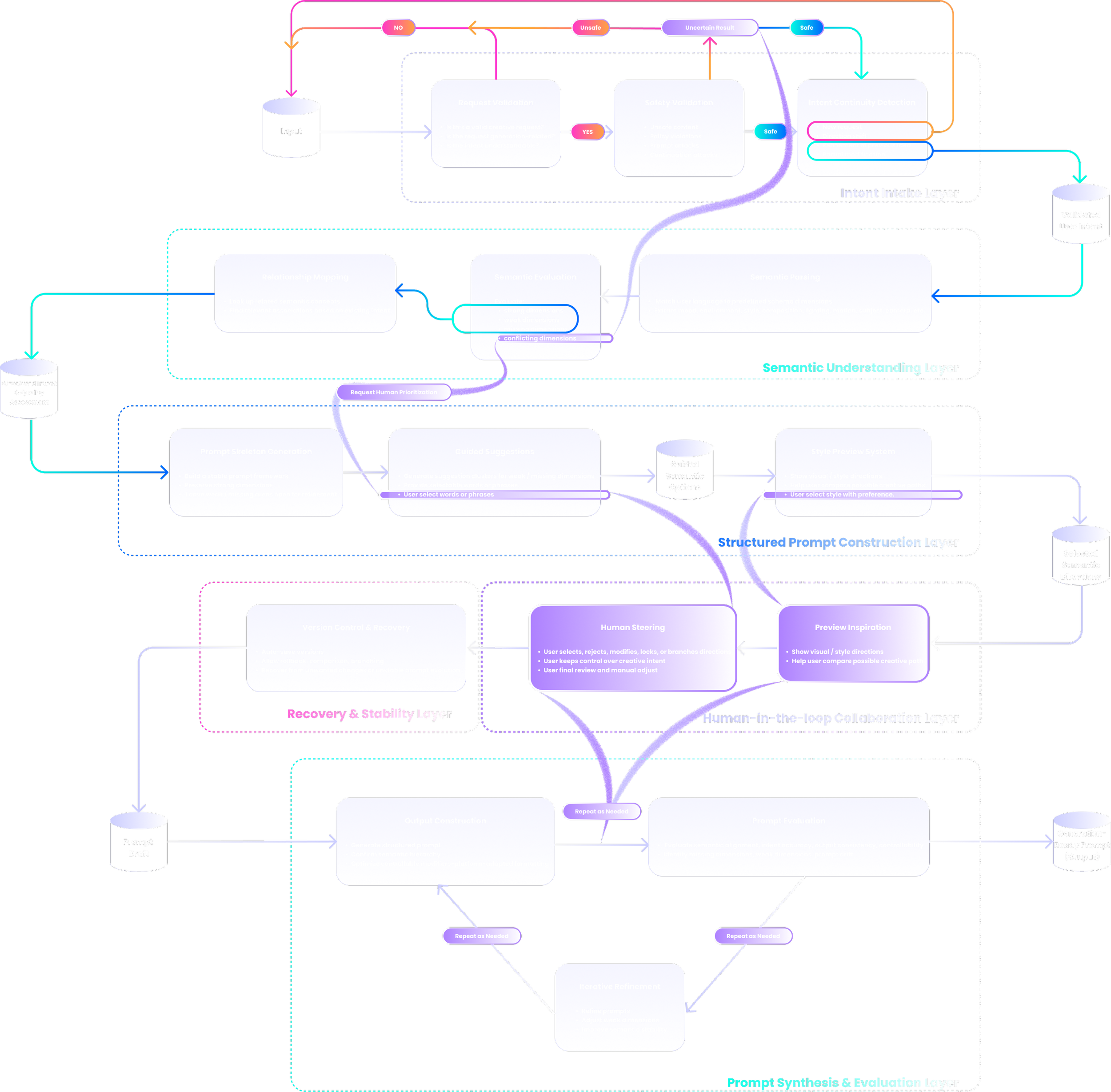
AIONE multi-layer workflow:

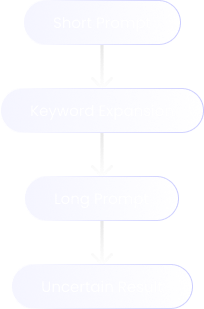
Existing Solutions on the Market: Expand user keywords into longer, more elaborate prompts, but often fail to capture the user's actual intent.

Instead of simply expanding keywords, AIONE helps users clarify, structure, and refine their intent. Guided recommendations, visual references, version control, and human-in-the-loop collaboration ensure that prompts remain aligned with user goals.
2. System Architecture: How AIONE Works
From Human Intent → Structured Understanding → Guided Collaboration → Generation-Ready Prompt
AIONE helps users progressively transform vague ideas into structured, controllable prompts that more accurately reflect their intent. To support this process, AIONE is designed as a multi-layer intent collaboration system. Each layer performs a distinct role—from validating requests and understanding intent to guiding exploration, supporting human decisions, and synthesizing generation-ready prompts.
3. Understanding & Guiding Intent
AIONE evaluates each semantic dimension independently. Strong dimensions are preserved, weak dimensions are clarified through refinement options, and missing dimensions become opportunities for guided exploration. This allows users to expand intent without losing what they originally meant.
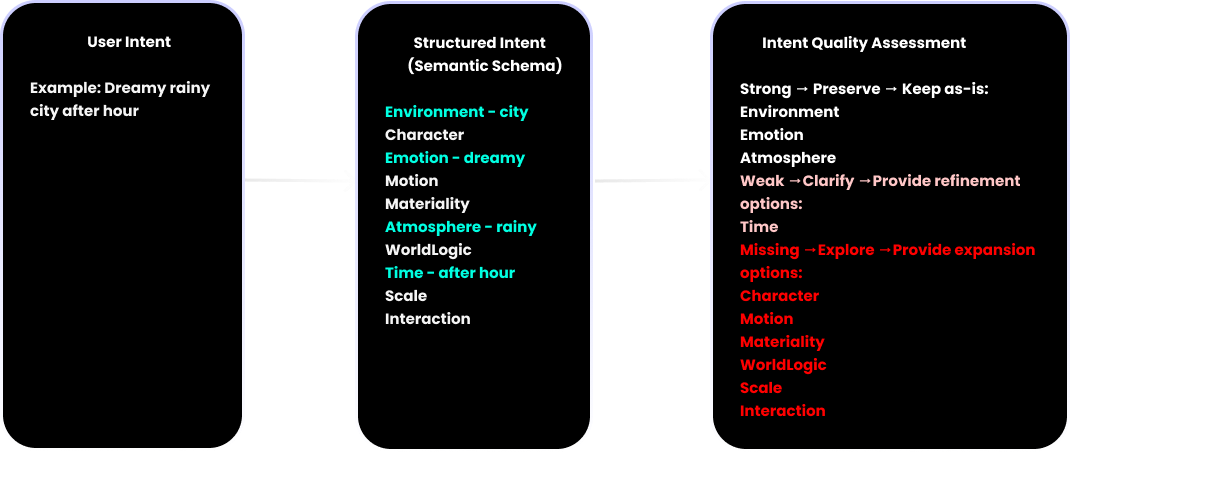
How AIONE use structured Schema to guarantee the quality of prompts
The process is intentionally iterative. Users can compare alternatives, branch into different creative directions, save versions, test generated outputs, and return to previous states at any time. Manual refinement remains available throughout the workflow, ensuring that AI guidance enhances rather than replaces human judgment.

Rather than deciding on behalf of users, AIONE presents contextual options and keeps decision-making visible and controllable. Users can select, modify, ignore, or combine recommendations based on their goals. Recommendations evolve with each user choice, gradually narrowing toward the user's intended direction. To support this process, AIONE generates vibe-matching visual references and semantic tags that make abstract ideas easier to evaluate, compare, and refine.
From a product design perspective, AIONE transforms prompting from a keyword expansion task into a collaborative decision-making process. The system combines explainability, human-in-the-loop interaction, visual guidance, version control, and controllable AI assistance to help users progressively refine intent while maintaining ownership of the final outcome.
AIONE introduces an intelligence and guidance workflow before generation begins. User intent is first mapped into a structured semantic schema and evaluated across multiple dimensions. Strong signals are preserved, Weak signals are clarified through targeted recommendations, and Missing signals become opportunities for exploration. This helps users transform vague ideas into clearer, more controllable creative directions.

4. Human-in-the-Loop: Designing for Human Control
AIONE's goal is not to replace human decision-making, but to help users express, refine, and preserve their intentthroughout the creative process. At every stage, users can accept, modify, ignore, or replace AI recommendations. Strong intent signals are preserved, while weak or missing dimensions become opportunities for guided exploration rather than automated decisions. Users remain responsible for selecting directions, evaluating alternatives, and determining which ideas best reflect their goals. The system evaluates, guides, and explains, but creative ownership always remains with the user.
Human-in-the-Loop Creative Process Workflow
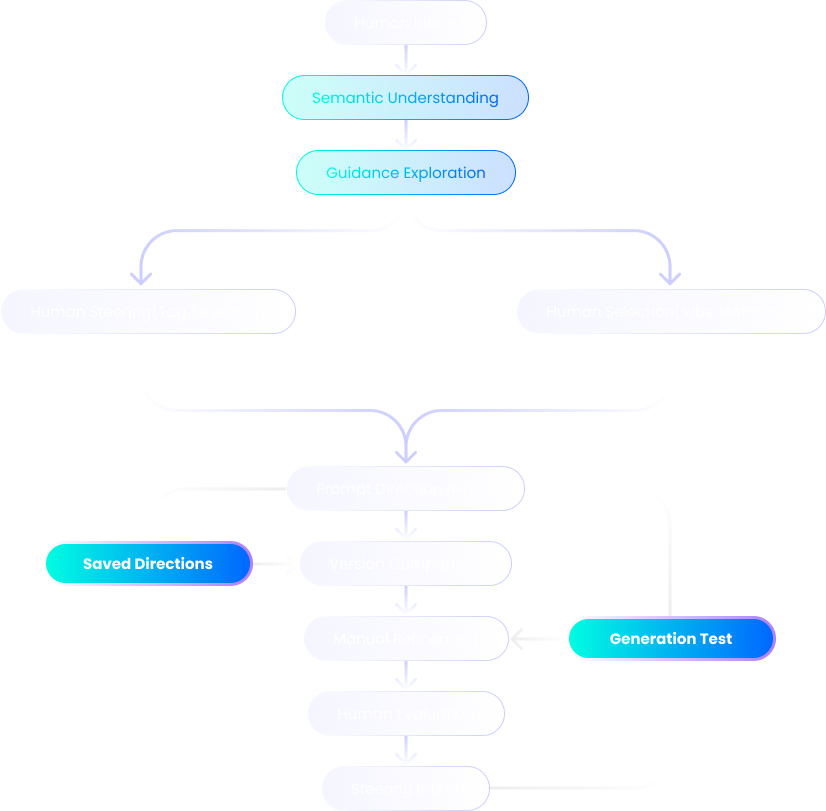
AIONE keeps humans in control throughout the entire creative process. From intent steering and vibe exploration to manual refinement and version comparison, users actively shape every decision while AI provides guidance, context, and alternatives.
5. Safety & Recovery: Designing for Failure and Stability
AI systems rarely fail in a single way. Beyond safety violations, failures can also emerge from ambiguous intent, poor user-system alignment, or iterative creative exploration. AIONE treats failure as an expected part of the workflow and provides dedicated detection and recovery mechanisms for different failure scenarios.

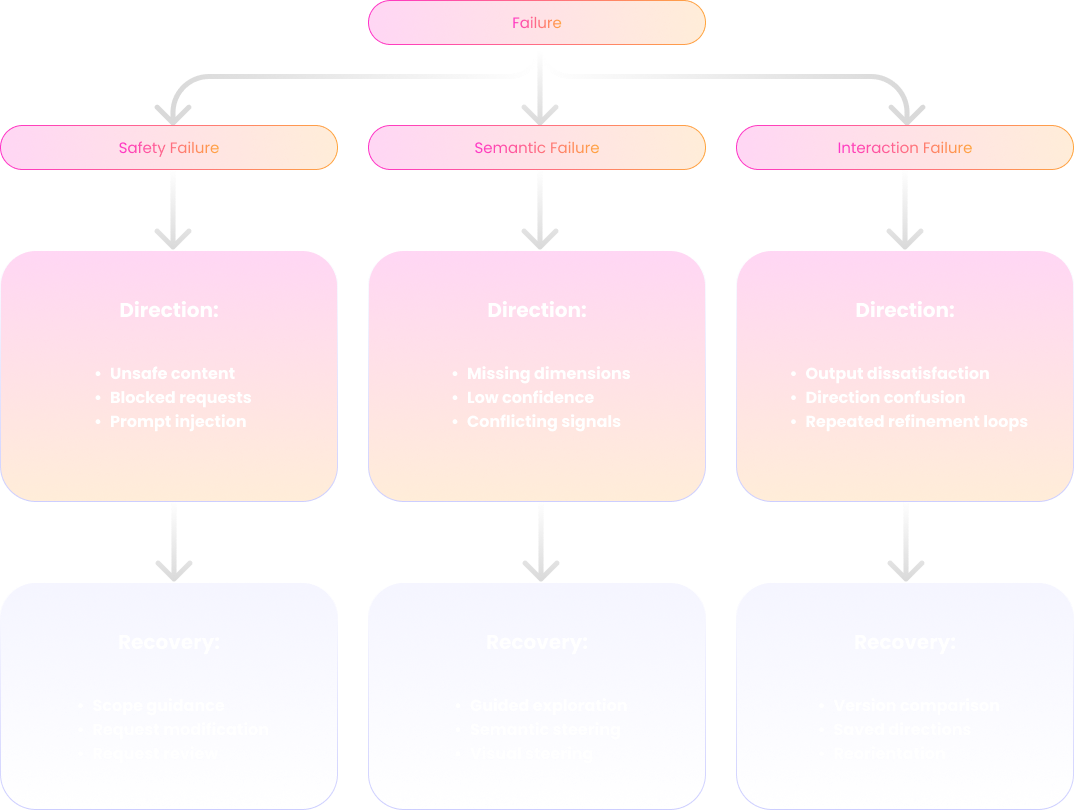
Trust is built not only through successful outcomes, but through predictable behavior when things go wrong. AIONE emphasizes transparency, recoverability, and user control to create a more reliable human-AI collaboration experience.

Failure Detection & Recovery Framework

AIONE incorporates a reliability and safety layer that validates requests before they enter the workflow. The system checks for relevance, unsafe content, and prompt injection attempts to prevent workflow failures and maintain predictable behavior.
Rather than blocking users without explanation, flagged requests receive transparent feedback and an optional manual review path, balancing system protection with a positive user experience.

6. Designing Human-AI Systems: Principles Learned from AIONE
Designing AIONE was not only an exercise in prompt creation. It became an exploration of how humans and AI should collaborate when goals are ambiguous, intent is difficult to express, and outcomes are inherently uncertain.
Here are Principles Learned from AIONE:
Intent Before Output - AI creates the most value when it understands what users mean before generating what users ask for.
Guidance Before Automation - The goal of AI is not to replace human judgment, but to reduce uncertainty and support better decisions.
Reliability Before Intelligence - Users trust systems that are understandable, controllable, and recoverable—not simply more powerful.